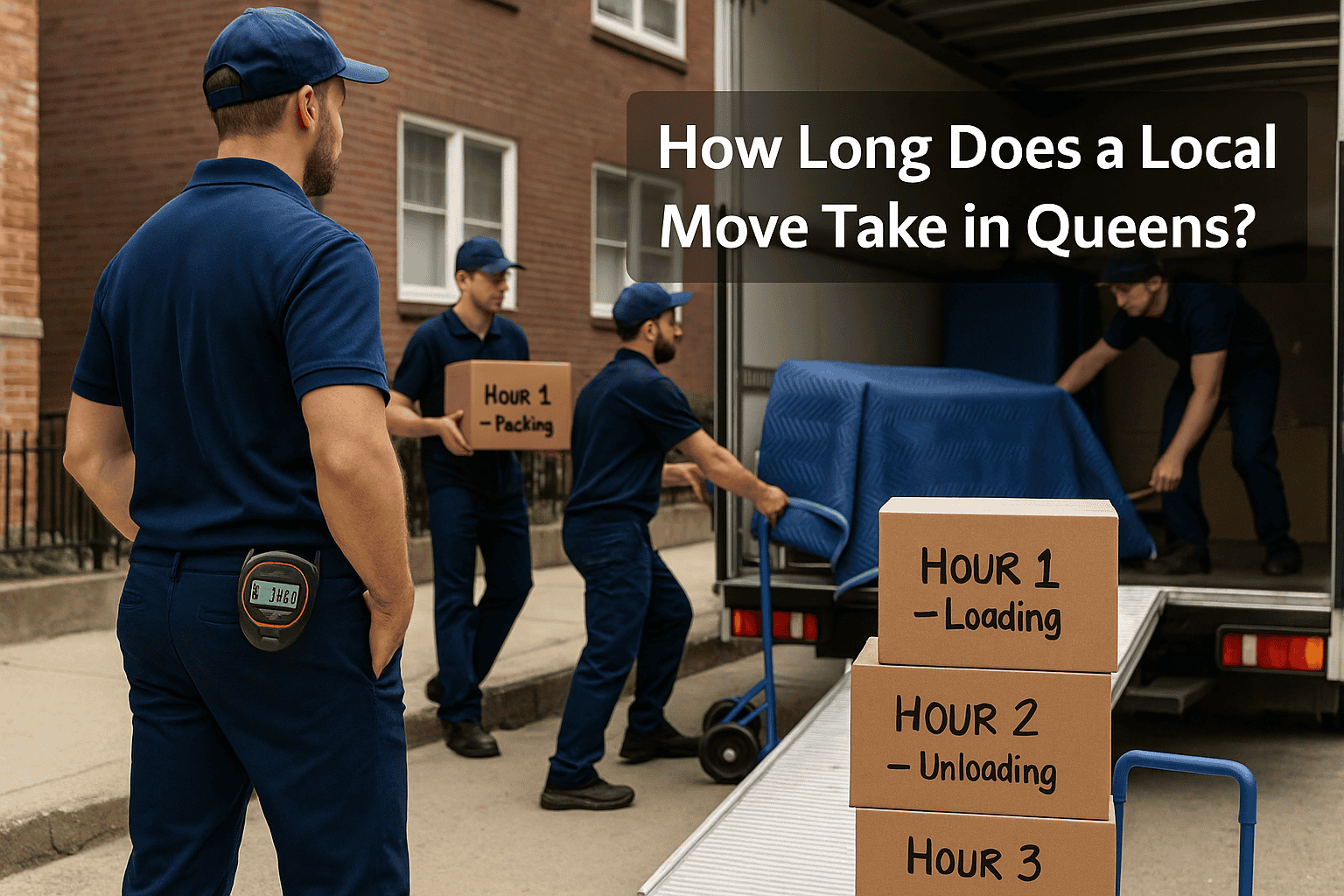
How Long Does a Local Move Take in Queens?

Moving professionals loading and unloading boxes from a moving truck in Queens, illustrating the timeline of a local move with labeled hours for packing, loading, and unloading.

Local moves across Queens vary widely in duration due to apartment size, building access, traffic patterns and how prepared you are before movers arrive. Companies such as Moving Companies Queens complete hundreds of moves across neighborhoods like Astoria, Forest Hills, Long Island City and Jackson Heights, giving them accurate insight into typical timelines. This guide explains the average duration of local moves, what affects the total hours needed and how to make your move faster and more efficient.

How long does it take movers to move a 1 bedroom apartment?

Most one bedroom apartment moves in Queens take 3 to 4 hours, depending on building access, elevator use and the total number of boxes and furniture items being moved.

Movers follow a predictable process that includes wrapping furniture, loading boxes, securing items in the truck and transporting everything to the new home. When buildings have elevators and easy parking, the move is completed faster. Walk up buildings with narrow staircases naturally require more time.

Key time considerations

  • Total number of movers assigned to the job
  • Walking distance between the truck and apartment entrance
  • Stairs or elevator restrictions
  • Amount of furniture that requires disassembly
  • Box count and packing quality

One bedroom apartments are among the most common moves in Queens which makes timing estimates consistent. Guidelines for safe lifting and handling published by the National Institute for Occupational Safety and Health (https://www.cdc.gov/niosh/) help movers maintain efficiency and protect your belongings.

How many hours do movers take for a local move?

Local moves generally take between 2 and 7 hours, depending on home size, layout and internal building logistics. The range applies to both short distance relocations and moves within the same neighborhood.

Time is mainly influenced by how quickly movers can load and unload. Organized packing, clear hallways and easy access reduce delays. Movers plan the timeline by assessing factors during the quoting stage which helps you understand what to expect.

Breakdown by typical job size

  • Studio apartment, 2 to 3 hours
  • One bedroom, 3 to 4 hours
  • Two bedroom, 4 to 6 hours
  • Three bedroom, 6 to 7 hours or longer

These timelines align with general labor expectations outlined by resources at Ready.gov (https://www.ready.gov) which encourage planning ahead to minimize time spent on moving tasks.
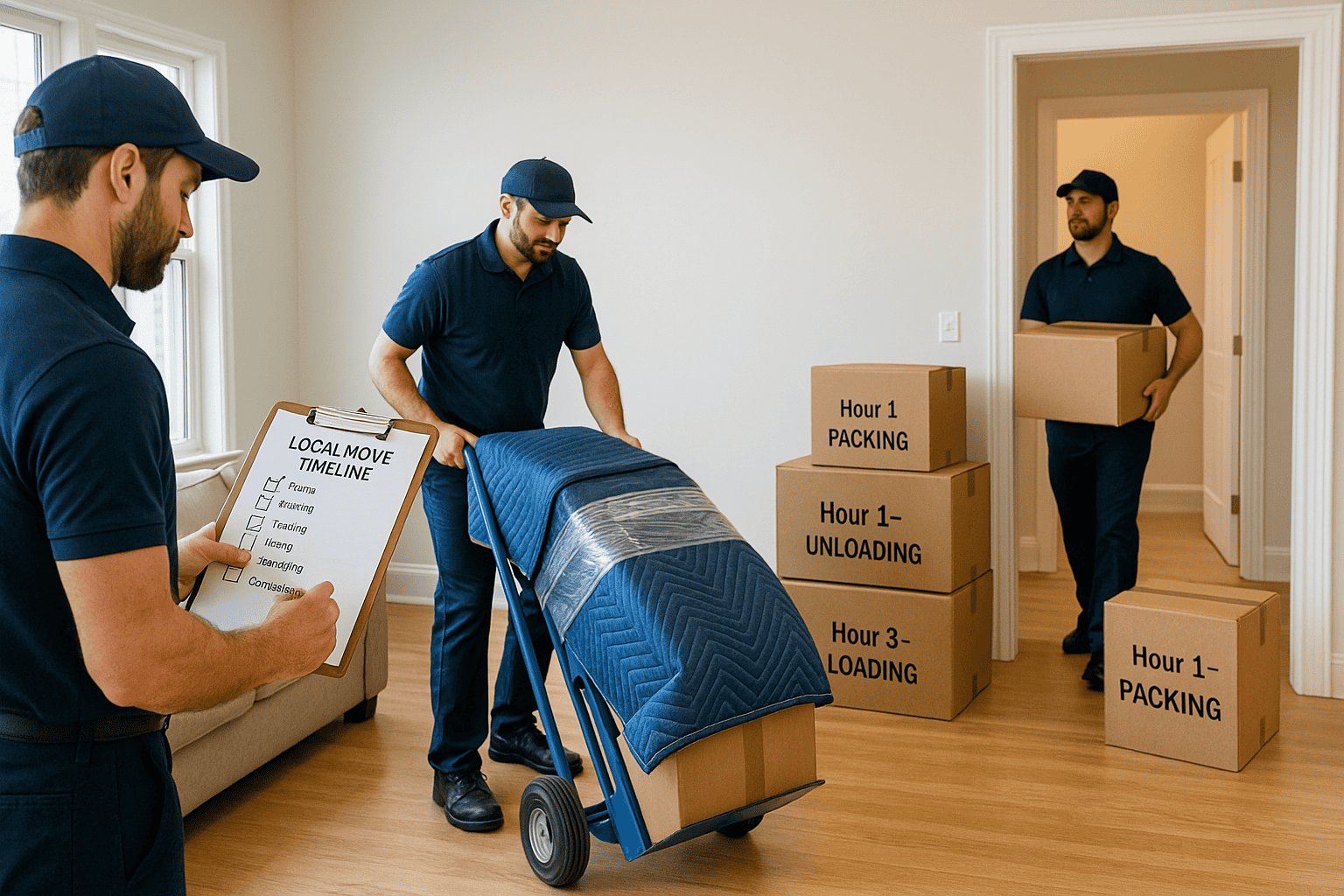
Queens movers carrying a wrapped sofa down an apartment stairway with a visible wall clock to show how long a local move can take.

What affects moving time?

Moving time is affected by apartment size, building access, number of stairs, elevator availability and the amount of furniture and boxes involved. Preparation plays a major role in total hours.

Queens contains a wide variety of residential buildings and layouts which means each move has unique challenges. Stairs, narrow hallways and loading zones affect total labor time. Movers need clear paths to carry boxes safely and efficiently.

Major factors that influence duration

  • Packing readiness, whether items are fully packed when movers arrive
  • Elevator reservations, which prevent delays
  • Long carries, long distances between truck and apartment entrance
  • Furniture disassembly, beds, tables and large items
  • Traffic conditions, especially during peak hours

According to the Federal Motor Carrier Safety Administration (https://www.fmcsa.dot.gov), planning and preparing early reduces the risk of delays and improves workflow on move day.

How early should I book movers?

You should book movers 2 to 3 weeks in advance for local moves in Queens to secure preferred time slots and avoid peak congestion days.

Booking early helps movers prepare the correct team size, truck and route. It also ensures your building management can approve service requests and elevator usage. Popular moving dates, such as weekends and the first or last days of the month, fill up quickly.

Benefits of early booking

  • Better schedule availability
  • Smoother coordination with building management
  • Easier planning for elevator reservations
  • More time to prepare and pack

Resources from NYC.gov (https://www.nyc.gov) recommend coordinating with your building early to avoid logistical issues on move day.

Do movers work faster if prepared?

Yes, movers complete jobs much faster when all items are packed, sealed and ready to carry. Preparation is the single most effective way to reduce your moving time.

Movers work more efficiently when they can start loading immediately. Proper labeling, decluttering and staging items near the entrance help reduce time carrying items through long hallways.

Ways to help movers work efficiently

  1. Pack early, all boxes sealed and labeled
  2. Clear pathways, remove obstacles or clutter
  3. Reserve parking and elevators, especially in large buildings
  4. Disassemble light furniture, when possible
  5. Group items by destination room, this speeds unloading

Following best practices published by USA.gov (https://www.usa.gov/moving) ensures your move stays organized and efficient.

Additional Time Influencers

Building conditions in Queens

Many Queens apartments are located in older walk up buildings or compact multi family homes. Movers often face multiple flights of stairs, tight doorways and limited truck access which affect loading and unloading speed.

Neighborhood traffic and parking

Traffic varies between areas like Flushing, Astoria, Forest Hills and Long Island City. Limited parking availability may add a small amount of time.

Packing quality and organization

Poorly packed boxes or unsealed items slow down loading. Organized boxes with clear labels help movers unload faster at the new home.

Weather conditions

Rain, heat or snow influence handling time and path safety. Movers take precautions to protect flooring, furniture and walkways.

FAQ Section

How long does it take movers to move a studio in Queens?

Studios typically take 2 to 3 hours, depending on stairs, packing and building access.

Do movers take longer in walk up buildings?

Yes, walk ups increase labor time because movers must navigate stairs without elevator support.

How long should a two bedroom move take?

Most two bedroom moves take 4 to 6 hours, based on furniture size and number of boxes.

Can I speed up my move by packing myself?

Yes, packing everything before move day significantly reduces total job duration.

Do movers estimate time during the quote?

Yes, movers provide a time estimate after reviewing inventory and building details.

Does traffic affect local moving time?

Short travel times may increase when moving during rush hour but typically add only minor delays.

Are there peak times for local moving in Queens?

The first and last weeks of each month and weekends experience the highest deman

If you are planning a local move in Queens, the team at Moving Companies Queens can help you complete your relocation quickly and efficiently. Whether you are moving within neighborhoods such as Astoria, Sunnyside, Woodside, Jackson Heights, Forest Hills, Elmhurst or nearby areas, professional movers can streamline the process and save valuable time. Contact them to receive an accurate timeline estimate and schedule your move with confidence.

How Much Do Local Movers Cost in Queens?

Moving consultant in Queens showing a local movers cost estimate on a clipboard to a couple while uniformed movers load wrapped furniture and boxes into a truck in the background.

Hiring local movers in Queens can feel overwhelming when you are unsure about real pricing, what affects the total cost and how to compare quotes accurately. At the start, it helps to understand the standard pricing structure that reputable companies follow. Local moving services in Queens such as those offered by Moving Companies Queens are typically charged by the hour and influenced by factors including apartment size, building access and the total labor needed. This guide provides a clear breakdown of standard local moving costs, actionable tips to save money and expert insights to help you plan your relocation confidently.

How much does it cost to hire movers for a local move?

A typical local move in Queens usually costs between 300 and 1,200 dollars, depending on the apartment size, number of movers and total hours worked. This range reflects standard labor time for common residential relocations.

Most moves fall into predictable price ranges that relate directly to the size of your home and the workload. Smaller apartments require fewer labor hours, while multi bedroom homes need more staff and extended loading time. Local moves are billed hourly, which means efficiency and preparation directly influence the final cost.

Typical cost breakdown by apartment size

  1. Studio or small one bedroom, 300 to 500 dollars
  2. Mid size one bedroom, 400 to 650 dollars
  3. Two bedroom apartment, 600 to 900 dollars
  4. Three bedroom residence, 850 to 1,200 dollars or more

These ranges come from industry averages and common cost structures used by New York moving professionals. Rates are further influenced by building entrances, elevator availability and the amount of furniture needing protection or disassembly.

Additional cost components

Local moving rates in Queens often include:

  • Trained movers and trucks
  • Furniture wrapping and protection
  • Use of dollies and tools
  • Basic loading and unloading services

Extra services such as packing, unpacking or storage may add cost. According to the United States Census Bureau (https://www.census.gov), over 27 million Americans move each year, which means the pricing models for residential moves are well studied and consistent nationwide.

Professional Queens movers carrying a wrapped sofa and labeled boxes out of an apartment to illustrate the real cost of hiring local movers.

What do local movers include?

Local movers typically include standard labor services such as loading, securing your items in the truck, safe transport and unloading at your new home. These core services form the foundation of every local move.

Local moving packages are designed to cover essential handling tasks. This ensures your furniture and boxes are transported safely from one location to another. Movers use protective wrapping, moving blankets and hand tools to keep your belongings secure. Their process follows widely accepted moving safety guidelines published by the National Institute for Occupational Safety and Health (https://www.cdc.gov/niosh/), which emphasize proper lifting, load distribution and safe handling procedures.

Standard services you can expect

  • Disassembly of furniture when needed
  • Wrapping and protective materials
  • Loading and unloading items
  • Transportation within local Queens areas

Common add ons that cost extra

  • Full packing service
  • Unpacking service
  • Long carry fees if the distance from the truck to the apartment entrance is significant
  • Appliance preparation

These additions may increase the total bill but provide significant convenience for those with tight schedules or complex apartment layouts.

Do movers charge per hour?

Yes, most local movers in Queens charge per hour. Hourly billing typically includes a team of two or three movers and one truck. This structure makes costs predictable and fair based on the actual labor required.

The hourly rate varies depending on the moving date, building conditions and the complexity of your move. More movers can shorten total time but may increase hourly cost. This balance allows customers to choose between faster completion or reduced rates.

Typical hourly ranges

  • Two movers and a truck: 90 to 150 dollars per hour
  • Three movers and a truck: 120 to 200 dollars per hour

If your home has multiple floors, tight hallways or heavy furniture, additional labor hours may be necessary. According to guidelines from Ready.gov (https://www.ready.gov\\), planning early and staying organized reduces moving day time and improves cost efficiency.

How can I reduce my moving cost?

You can reduce moving costs by preparing early, decluttering before move day and ensuring all boxes are sealed and labeled. Efficiency is the most important factor in lowering the total bill.

Movers charge by the hour, so anything that saves time directly reduces cost. Proper packing, elevator reservations and easy access to your building help shorten labor time. Being prepared when movers arrive ensures the team can start work immediately.

Practical ways to save money

  1. Pack everything in advance to avoid paying movers for idle time.
  2. Reserve elevators in high rise buildings.
  3. Label boxes clearly to speed up unloading.
  4. Remove clutter to reduce total items moved.
  5. Use smaller boxes for books and heavy items to prevent delays.

These methods follow best practice recommendations similar to organization steps suggested by community guidance at NYC.gov (https://www.nyc.gov), which emphasizes preparation for efficient relocations.

How long do local moves take?

A typical local move in Queens takes between 2 and 7 hours, depending on the apartment size, building access and amount of furniture. Smaller moves finish quickly while multi bedroom homes require additional labor.

Timing varies based on distance between addresses, number of stairs and how well your belongings are packed. Movers often estimate time during the quoting process. These approximations help customers plan their schedules and understand expected labor hours.

Standard timelines by home size

  • Studio, 2 to 3 hours
  • One bedroom, 3 to 4 hours
  • Two bedroom, 4 to 6 hours
  • Three bedroom, 6 to 7 hours or more

Movers use safe lifting techniques and follow transportation guidance referenced by the Federal Motor Carrier Safety Administration (https://www.fmcsa.dot.gov). These practices ensure a smooth and safe workflow throughout the move.

Additional Factors That Influence Cost

Building access conditions

Queens is known for diverse building layouts that often include walk ups, narrow staircases and limited truck parking. These conditions affect loading time and may require more movers.

Travel time within Queens

Although considered a local move, travel between neighborhoods like Astoria, Jackson Heights, Forest Hills or Long Island City can add short but meaningful time increments.

Item weight and specialty handling

Heavy furniture, fragile items or professional equipment require added preparation and handling time.

Packing service and materials

If movers provide packing, additional fees apply for materials such as boxes, tape and protective padding.

FAQ Section

What is the minimum cost for movers in Queens?

Most local moving jobs cost at least 300 dollars, which includes a basic two person team and truck for a short duration.

Are packing supplies included?

Standard moving rates include blankets and protective wrap. Boxes and packing paper usually cost extra unless part of a packing package.

Do movers handle fragile items?

Yes, trained movers pack and wrap fragile items carefully using proper materials to reduce risk during transport.

Can movers disassemble furniture?

Yes, most movers can disassemble and reassemble common household items as part of standard service.

How far in advance should I book movers?

Booking at least two to three weeks in advance is recommended for ideal scheduling.

Do movers work in walk up buildings?

Yes, movers regularly work in walk ups but the extra labor required may increase total time.

Are tips expected for movers in Queens?

Tipping is common but not required. Many customers tip based on service quality and job complexity.

If you need reliable local moving help in Queens, contact the trusted team at Moving Companies Queens. Whether you are relocating within neighborhoods such as Astoria, Long Island City, Jackson Heights, Forest Hills, Elmhurst or nearby areas, professional movers can ensure a smooth, secure and efficient moving experience. Reach out today to request an accurate quote and plan your move with confidence


Navigating the Stress of Long-Distance Moving from Rego Park, NY

Image featuring a modern building with red and gray architecture, promoting tips for a stress-free long-distance move from Rego Park, NY. The text emphasizes preparation strategies for a smooth transition. Contact details for Big Mike's Moving Companies Queens are included.

Moving is a big deal, isn’t it? Especially when it’s a long-distance move. It’s not just about packing up your things and heading out—it’s about uprooting your life and starting fresh somewhere new. For folks in Rego Park, NY, the idea of moving cross-country can feel overwhelming, and honestly, that’s completely normal. Did you know that, according to the U.S. Census Bureau, around 11 million Americans moved to a different state in 2019 alone? That’s a lot of people navigating the same challenges you’re facing right now.

So, how do you make this process less stressful? How do you turn what could be a logistical nightmare into something manageable—maybe even exciting? Let’s break it down step by step.


The Big Picture: What to Expect with Long-Distance Moves

Long-distance moving isn’t just about distance—it’s about planning. From budgeting to packing, and even emotional preparation, there’s a lot to think about. But here’s the good news: with a little organization and the right resources, you can make the entire process much smoother.

Think of it like this: moving is kind of like planning a big event. You wouldn’t throw a wedding or host a major party without a checklist, right? The same goes for moving. Whether it’s researching moving companies, packing up your life, or saying goodbye to your favorite spots in Rego Park, every step matters.


Step 1: Researching Moving Companies (Because Not All Movers Are Created Equal)

Let’s face it—choosing the right moving company can make or break your experience. A good moving company is like a trusted friend who knows how to handle the heavy lifting (literally). But how do you find “the one”?

  • Ask Around : Start by asking friends, family, or even neighbors for recommendations. Word of mouth is still one of the best ways to find reliable services.
  • Read Reviews : Hop online and check out reviews on platforms like Yelp or Google. Look for companies with consistent positive feedback and avoid ones with red flags like hidden fees or poor communication.
  • Compare Costs : Moving isn’t cheap, but that doesn’t mean you should overpay. Get quotes from multiple companies and compare not just the price but also the services included. Some movers offer extras like packing supplies or storage options, which could save you time and stress.

Pro tip: If you’re moving cross-country, look into companies that specialize in long-distance moves. They often have the experience and resources to handle the unique challenges of transporting your belongings over hundreds (or thousands) of miles.


Step 2: Packing Like a Pro (Or Close Enough)

Here’s the thing about packing: it’s easy to underestimate how much stuff you actually have. What starts as “just a few boxes” can quickly turn into a mountain of belongings that needs to be sorted, labeled, and carefully packed.

What You’ll Need:

  • Boxes : Get a mix of sizes—small ones for heavy items like books and larger ones for lighter, bulkier items like bedding.
  • Packing Materials : Bubble wrap, packing paper, and sturdy tape are your best friends. Don’t skimp here; it’s worth it to protect your stuff.
  • Labels : Trust me, you’ll thank yourself later if you label every box with its contents and destination room.

Tips to Keep It Simple:

  • Start Early : Begin packing weeks before your move. Tackling one room at a time can make the process feel less overwhelming.
  • Declutter : Use this as an opportunity to get rid of things you don’t need. Haven’t worn that sweater in two years? Donate it. Holding onto old magazines? Recycle them.
  • Pack Smart : Place heavier items at the bottom of boxes and use soft items like towels or clothing to cushion fragile items.

Oh, and don’t forget to pack an “essentials box” with things you’ll need right away at your new place—think toiletries, a change of clothes, and maybe even some snacks.


Step 3: Timing Is Everything

When it comes to moving, timing can make a huge difference. Moving in the middle of summer? Be prepared for higher prices and busier schedules. If you have flexibility, consider moving during the off-season (fall or winter) when demand for movers is lower.

Also, think about what’s happening in your life. Do you have kids who need to finish the school year? A job transition to coordinate? Life doesn’t stop just because you’re moving, so try to pick a date that works for everyone involved.


Step 4: Don’t Forget the Little Things

Moving isn’t just about packing boxes and loading a truck—it’s about tying up loose ends. Before you leave Rego Park, make sure you:

  • Update Your Address : Notify the post office, banks, and any subscription services of your new address.
  • Transfer Utilities : Schedule shut-off and start-up dates for utilities at both your old and new homes.
  • Say Goodbye : Take some time to visit your favorite local spots—whether it’s a park, a coffee shop, or your go-to pizza joint. Moving is bittersweet, and it’s okay to take a moment to reflect.

Why Professional Movers Are Worth It

Let’s be real—moving is a lot of work. If you’re feeling overwhelmed, hiring professional movers can be a game-changer. Not only do they handle the heavy lifting, but they also bring expertise to the table. From safely packing fragile items to navigating tricky staircases, they’ve seen it all.

And here’s the kicker: while hiring movers might seem expensive upfront, it can actually save you money in the long run. Think about it—fewer damaged items, less time off work, and way less stress.


Final Thoughts: Embracing the Adventure

Moving long-distance is no small feat, but it’s also an opportunity—a chance to start fresh, explore a new place, and create new memories. Sure, there will be challenges along the way, but with the right mindset and a solid plan, you’ve got this.

So, whether you’re leaving Rego Park for the bright lights of Manhattan or heading somewhere completely new, remember: every ending is a new beginning. And who knows? This move might just be the start of something amazing.

Mind-Blowing Facts You Need To Know About The History Of Queens, NY

Mind-Blowing Facts You Need To Know About The History Of Queens, NY

Queens is the most ethnically diverse borough of New York but that’s not the only reason this place is worth our attention. This place also happens to have a long history that goes way back to colonial times. Geographically speaking, Queens is part of Long Island and was first inhabited by the Native Lenape American people

The Lenape people mostly lived in small bands and led an agricultural way of living. There were numerous bays and creeks in Queens that provided the Lenape people with resources for fishing and other livelihood needs. 

Want to know more about the history of Queens, here’s the list of things you should know. 

Where Queens Came From

As part of the New Netherlands colony, the Dutch and English colonizers came to Queens along with the settlements in Maspeth and Vlissingen which are now Flushing. 

In the 1650s there was a signing of the Flushing Remonstrance, a provision that focused on freedom of religion. In a way, this was deemed as an attack on the American colonies at that time. 

In 1683, Queens came under the ruling of the original New York colony. Under the English rule, the place was called Queens County

There was a revolutionary war wherein Queens remained under English rulership. The battle mostly occurred in Brooklyn with Queens only paying a minor part. 

By 1800, Queens remained mostly agricultural. Years after, Long Island City was formed separating it from the town of Elmhurst. 

When Queens Became Part Of New York City

The Queens borough became part of New York City on January 1, 1898. New transportation routes were introduced in the years that came by and thus transforming Queens from a sleepy borough into a much more sophisticated one. 

In 1909, the Queensland Borough Bridge opened which was followed by a rail tunnel under the East River in 1910. 

There was also the IRT Flushing subway line that connected Manhattan and Queens in 1915. Combined with the rise of automobiles, the population of Queens quickly doubled in just about a decade. By 1930, Queens was already populated by over one million people. 

Queens In The Recent Years

The 1970s and 2000s have been recorded in Queen’s history as the Great Immigrant experience. 

The Immigration and Nationality Act of 1656 brought legal immigration worldwide. It wasn’t long before Queens became the destination of most immigrants. From then on, most of Queens’ residents have been from overseas with over a hundred languages spoken. 

Queens was struck with a tragedy in the 2000s. The 7/11 attacks have been brutal and cost the lives of many people. 

In November 2001, more than 200 people died when American Airlines Flight 587 in the rockaways. 

In October 2012, low-lying areas in Southern Queens were also devastated due to Sandystorm Sandy. There was also massive fire during the wake of the storm that swept the Breezy Point neighborhood that resulted to more than a hundred homes destroyed. 

Sensational & Famous People From Queens, NY

Sensational & Famous People From Queens, NY

Queens is hailed for its diverse and adventurous ethnicity but that’s not the only reason Queens NY is so popular. Perhaps, one of the reasons the world started to take notice of this part of New York was because many celebrities and famous people from Queens emerged from there. 

Here are some of our favorites famous people from Queens 

Marie M. Daly

She was the first African-American woman to receive a P.h.D in Chemistry in the United States. Daly was born on April 16, 1921, in Queens. She went to Queens College in Flushing to get her bachelor’s degree in Flushing, followed by her master’s degree. 

Right after that, Daly headed to New York University to get started with her Master’s degree. However, it was in Columbia University where Daly actually got her P.h.D. 

Daly did not come from a well-off family. With that, she had to work as a lab assistant at Queens College so she could finance her graduate school studies. 

Christopher Walken

If you’re familiar with the films “The Deer Hunter”, “Ännie Hall”, and “The Dead Zone”, you will be glad to know that one of the actors in those movies Christopher Walken came from a neighborhood in Queens – Astoria. 

It was because of the childhood experiences that drove him into the entertainment industry. Walken said that it was quite normal for working-class people to send their kids to dancing school. You’d learn to tap dance, ballet, and acrobatics. Most of the time, you’d even get to sing and dance. 

50 Cent

50 Cent’s real name was Curtis James Jackson III. In his biography, it was quoted that Jackson was born in South Jamaica, Queens. 

Aside from being a well-known rapper, he is also an established businessman. You’ll read more about his life when you get a hold of his biography “From Pieces to Weight: Once Upon a Time in Southside Queens”, as well as the movie that was based on his life “Get Rich or Die Trying”.

Ronald William Artest

You might know him better as Metta World Peace. He is an American Professional Basketball coach and a former ballplayer.  

Right now, he works as the player development coach of the South Bay Lakers in the NBA G League. 

Artest grew up at the Queensbridge Houses and was the eldest out of six children. Later on, he went to St. John’s University in Queens. As he joined the school basketball team, he contributed to the achievement of the Red Storm in getting a 22-10 score, as well as advancing into the NCAA Tournament. 

Donald Trump

Of course, we can never discount the United States President – Donald Trump. Aside from being a president, he is also a well-known businessman, author, and politician. 

On June 14, 1946, Trump was born in Jamaica Estates, Queens. Before Trump could graduate from college, he began a career in real estate at his father’s company – Elizabeth Trump and Son. in 1197, Trump also played his own character at the “The Drew Carey Show”. The episode was called “New York and Queens.”

For More Info, Visit Us Here